How a Baby's Brain Builds and Prunes Its Wiring
A newborn's billions of brain cells are mostly not yet linked, and over the first years the brain creates new connections quickly and clears unused ones. Experiences and interactions with caring adults, like serve and return and peekaboo, help shape this.
Read along
The full Gist, word for word. The small numbers link to the sources for each fact.
A newborn arrives with billions of brain cells, yet most of those cells have not linked up with one another.4 Then how does that loose collection of cells turn into the quick, curious mind of a toddler? The answer is a story of wiring, trimming and everyday moments between a baby and the people nearby. Work on the brain is already underway before a baby is born.3
Part of that early work is shaping the brainstem, which is the most ancient and primitive region of the whole brain.3 A human brain as a whole holds roughly 100 billion neurons, the cells that do the brain's signaling work.6,5 These neurons pass chemical signals to one another over very small spaces, and scientists call those spaces synapses.5 Each of these tiny gaps is a spot where one cell can hand a message on to the next.5
At the moment of birth, the wiring between all these cells is far from finished.5 Much of the job of linking them together still lies ahead.4,5 Picture a newly built town where every house is ready, but most of the houses are not yet joined by streets. That is roughly the starting point of a newborn brain.
The streets, in this picture, go in at a remarkable pace. From birth until age three, a child's brain creates over one million fresh neural connections every single second.4 Each passing second of those early years adds more than a million new links to the network.4 The same three years form a crowded window for development.
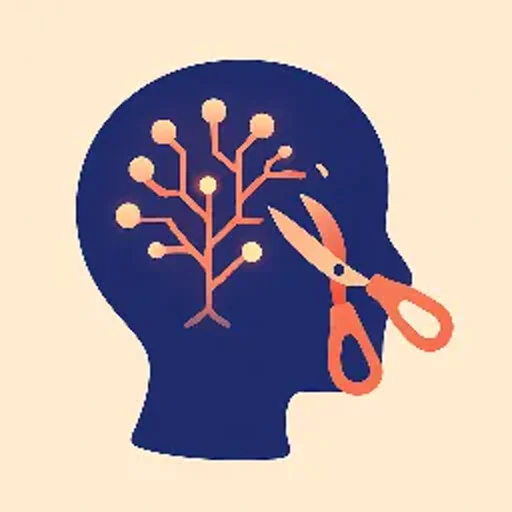
The pathways for hearing, for language and for higher cognitive function all hit their peak during a child's first three years.4 Building, though, is only half of the process. The brain also edits its own wiring, through something scientists call synaptic pruning.3 During pruning, connections that sit unused get cleared away.3
Meanwhile, connections that are switched on again and again grow stronger.3 The outcome is brain circuitry that becomes more refined over time.3 In this way, the brain both adds huge numbers of links and clears out the ones it does not use.4,3 Life outside the brain plays a large part in this story too.
What happens to a small child, and who that child spends time with, has a real, physical effect on how the brain is built.1 Toxic stress, on the other hand, causes harm to a growing baby brain.5 One pattern of interaction between a baby and an adult goes by the name serve and return.1 In serve and return, a baby sends out a signal, such as a smile, a sound or a gesture.1
A caring adult then answers with a response that ties back to what the baby offered.1 If a baby coos, for example, the adult might coo back. The exchange becomes a back-and-forth, with the baby and the adult each taking a turn.1 Simple games have their own role as well.
Peekaboo, for instance, helps a baby understand an important idea about the world.1 As something slips out of sight and then returns, the baby starts to understand that it kept existing all along.1 From the brainstem forming before birth to a game of peekaboo, a baby's brain takes shape through building connections, trimming them and the people around it.1,1,3,3
Quick quiz
Lock it in: pick an answer to see if you got it.
1. What does synaptic pruning do to the brain's circuitry?
Answer: Removes unused connections and strengthens frequently activated ones. Synaptic pruning refines circuitry by clearing away unused connections while strengthening those that are activated again and again.
2. In serve and return, how does a caring adult respond when a baby offers a smile, sound or gesture?
Answer: With a reply that connects to what the baby offered. In serve and return, the baby offers a smile, sound or gesture and the caring adult replies in a way that connects to it.
Sources
Every fact in this Gist is checked against these sources before it is published.
- Building babies’ brains through play: Mini Parenting Master Class | UNICEF Parenting
- Brain development: pre-teens and teenagers
- The Neuroscience of Brain Development and Its Impact on Parenting | Better Together Family Therapy
- Why 0–3? Baby Brain Science & Child’s Brain Development | Zero To Three
- Your baby’s brain: How parents can support healthy development | Caring for kids
- What are the Stages of Child Brain Development? – Amen University
Get a new Gist every day
1,000+ Gists on 37 topics in the GistWise app: a Gist of the Day every morning, quizzes, streaks and offline listening.