The Silk Road: A Web of Routes Linking East and West
The Silk Road was a network of many routes, not one road, linking East Asia and the Mediterranean from 130 BC to 1453. Traders, ideas like paper and religions such as Buddhism and Hinduism traveled along it.
Read along
The full Gist, word for word. The small numbers link to the sources for each fact.
Imagine one long, dusty highway stretching from China all the way to the Mediterranean Sea, with travelers marching down a single unbroken line. The real Silk Road looked nothing like that, since it was a web of many routes rather than a single road.3 In other words, there was never just one path for a traveler to follow.3 So where did the name come from, and what actually traveled along those paths?
The label itself dates from 1877.3,5 That year, the geographer Ferdinand von Richthofen became the first to use the phrase silk road.3,5 He applied it to the pathway that carried merchandise back and forth between Europe and East Asia.3,5 In modern usage, the name covers a whole cluster of ancient commercial routes, not just one.6,3
Those routes tied East Asia to Central Asia, to South Asia and to the Mediterranean world.6 Even the main Silk Road did not stay as one line.2 It branched three ways, into what are called the Northern, Central and Southern routes.2 Taken together, the territory these paths crossed is now divided among more than 40 modern countries.2
Grand highways in the region came even earlier: roughly 300 years before the Silk Road opened, the Persian ruler Darius I created one known as the Royal Road.5 In 138 before Christ, a Chinese emperor dispatched an envoy named Zhang Qian on a diplomatic mission toward the west.1 The aim of that journey was to bring horses back to China.1
In 130 before Christ, China's Han Dynasty opened the routes to trade, and they stayed in use for well over a thousand years, until the Ottoman Empire closed them in 1453.5
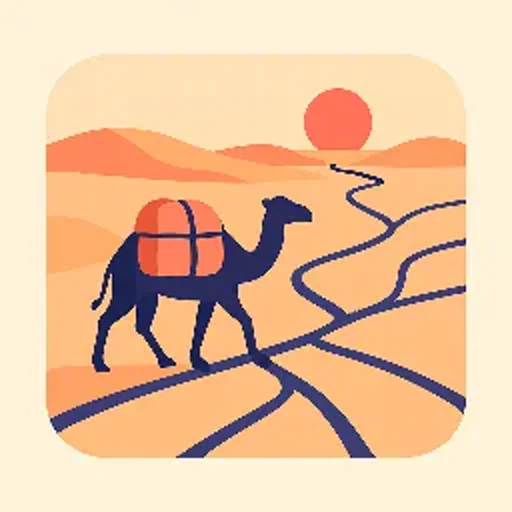
With the timeline in place, the next question is how people actually made such a long trip. Rather than travel alone, traders joined up in caravans, moving with camels or other pack animals.3 The purpose of these groups was to protect the people in them while on the road.3 Along the way, a traveler might stop at a caravanserai.3
This was an inn built around an open courtyard, and it gave shelter to people on the move across Asia and North Africa.3
Goods and animals were only one kind of cargo. Ideas and inventions moved along the network as well. Paper, which was first invented in China, was one of the things carried westward along these routes.5 By around the year 700, it had reached Samarkand.5
Gunpowder may have followed a similar path. Historians believe it was carried along the Silk Road routes toward Europe.5 According to that view, Europeans then refined it during the 1300s for firing cannons.5 Religion traveled too.
Two faiths, Buddhism and Hinduism, moved from place to place along the network.4 They were carried not only by merchants, but also by scholars and missionaries.4
The sea offered another way. Ocean routes became a direct alternative to the land network.1 Those sea lanes avoided the taxes charged on the overland paths, and they also avoided the bandits who threatened travelers there.1
The Silk Road was a web of land routes that carried goods, paper and religious beliefs between East Asia and the Mediterranean from 130 before Christ until 1453.3,5,5,4,6
Quick quiz
Lock it in: pick an answer to see if you got it.
1. According to the lesson, what was the Silk Road?
Answer: A network of routes rather than one actual road. The lesson says the Silk Road was not one actual road or single route but a network of routes.
2. Why did traders form caravans with camels or other pack animals on the Silk Road?
Answer: To protect themselves on the roads. Traders formed caravans with camels or other pack animals to protect themselves on the roads.
Sources
Every fact in this Gist is checked against these sources before it is published.
- Silk Road History and Background — Silk Road Adventures
- Silk Road Travel Guide
- The Silk Road
- TRADE AND CULTURAL EXCHANGE ALONG THE SILK ROAD
- Silk Road - Facts, History & Location | HISTORY
- The Silk Road in World History
Get a new Gist every day
1,000+ Gists on 37 topics in the GistWise app: a Gist of the Day every morning, quizzes, streaks and offline listening.