The Tragedy of the Commons: Shared Resources and Overuse
The lesson explains how resources open to everyone, like pastures, fish stocks and forests, can be overused when people ignore the harm to others. It also covers studying overuse through experiments and how fees, taxes and quotas may change how heavily a resource is used.
Read along
The full Gist, word for word. The small numbers link to the sources for each fact.
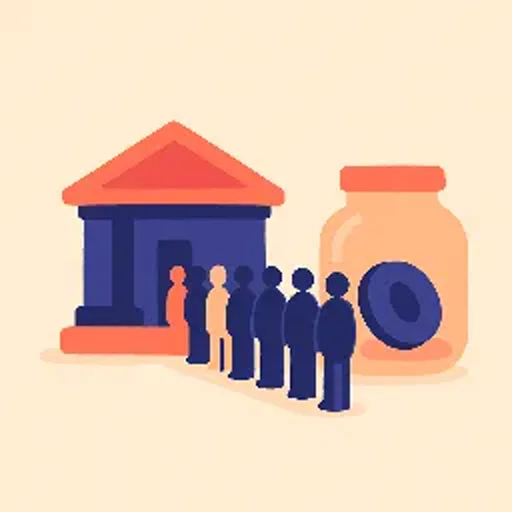
Picture a meadow that belongs to no one in particular. What happens when every visitor decides alone how much of it to take? That puzzle sits at the center of an idea known as the tragedy of the commons. The idea covers situations in which people draw too heavily on something they share.3
Each person leaves out of the calculation the damage those choices do to other people.3 To follow the idea, it helps to pin down one word. Here, a commons means any resource that is open to all.2 Nobody is shut out, and nobody faces limits on how it gets used.
Anyone can make use of it, freely and openly.2 Today's sense of the idea is closely linked to ecologist Garrett Hardin, whose 1968 article took it up. The present-day version of the concept remains closely bound to that ecologist and his 1968 piece.2 The usual example used to explain the problem features shepherds.3
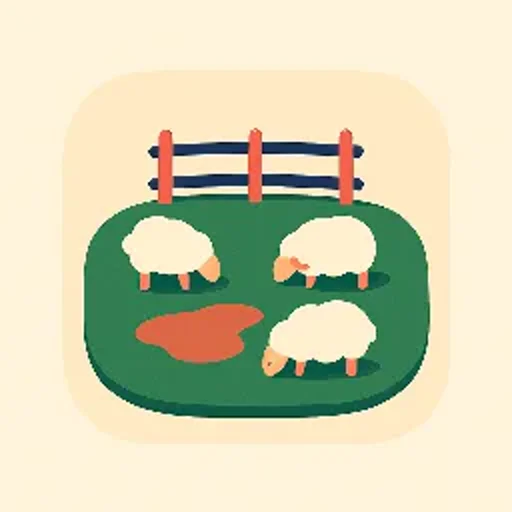
Imagine a group of them sharing a single unregulated piece of pasture. The land is open to the whole group, and no one has set rules for it.3 Every shepherd must settle on how many sheep to put out to graze there.3 No rule governs the plot, and each shepherd makes that choice alone.3
The same logic appears with a farmer adding one more animal to shared land.2 That farmer collects every bit of the gain from the extra animal.2 Yet the farmer covers only a portion of what that animal costs, while the rest of the cost lands on others who share the land.2 Seen from one person at a time, adding animals looks attractive.
Seen from the whole group, the picture changes. The pasture is only an illustration, though, and the same pattern turns up well beyond shepherds and farmers. When a resource has no owner, it may end up being used too much.4 This kind of heavy use of shared, common pool resources counts as a major cause of what is known as environmental market failure.4
Fish stocks are one example of a resource with no owner that may be taken too heavily.4 Forests are another case where the lack of an owner may mean the resource gets used too heavily.4 With renewable resources, the trouble does not have to be short lived.4 Overuse can shrink how much a renewable resource is able to keep providing over the long run.
The measure that falls is known as the maximum sustainable yield, and the drop can be long term.4 With a problem this broad, it is natural to wonder how it gets studied, and what might ease it. Researchers have looked closely at overuse through experiments.3 These are known as common pool resource games, and they have been run widely.3
Such games give scientists a structured way to test how overuse plays out. Researchers have relied on them widely when studying how shared resources get overused.3 One response that gets discussed is putting a price on access.2 Charging taxes or fees on a shared resource may lead people to take less of it.2
Another response that comes up is a quota. A quota might seem like a direct fix. But the picture may not be so simple. In some cases, a quota may leave overuse worse than it would be with no policy in place.3
How a shared resource is priced or limited may change how heavily it gets used.2,3
Quick quiz
Lock it in: pick an answer to see if you got it.
1. In the shared-pasture example, what does a farmer who adds one more animal to shared land pay?
Answer: Only part of the cost, while keeping the whole benefit. The farmer keeps the whole benefit of each extra animal but pays only part of its cost, with the rest falling on others.
2. What may happen to a renewable resource that is over-used, according to the lesson?
Answer: Its maximum sustainable yield may decline over the long term. Over-using a renewable resource can cause a long-term decline in its maximum sustainable yield.
Sources
Every fact in this Gist is checked against these sources before it is published.
- Tragedy of the commons - Wikipedia
- Tragedy of the commons | Science | Research Starters | EBSCOhost
- The tragedy of the commons and socialization: Theory and policy
- Tragedy of the Commons | Topics | Economics | tutor2u
- Lesson 5: The Tragedy of the Commons
- Are there theories that invalidate the "tragedy of ...
Get a new Gist every day
1,000+ Gists on 37 topics in the GistWise app: a Gist of the Day every morning, quizzes, streaks and offline listening.